
THE INTERNATIONAL MARITIME FINANCIAL ECOSYSTEM (IMFE) ECOSYSTEM IS ORIENTED FOR DEVELOPMENT WITHIN THE VIETNAM INTERNATIONAL FINANCIAL CENTRE IN HCMC
Posted on 27/05/2026
THE INTERNATIONAL MARITIME FINANCIAL ECOSYSTEM (IMFE) ECOSYSTEM IS ORIENTED FOR DEVELOPMENT WITHIN THE VIETNAM INTERNATIONAL FINANCIAL CENTRE IN HCMC
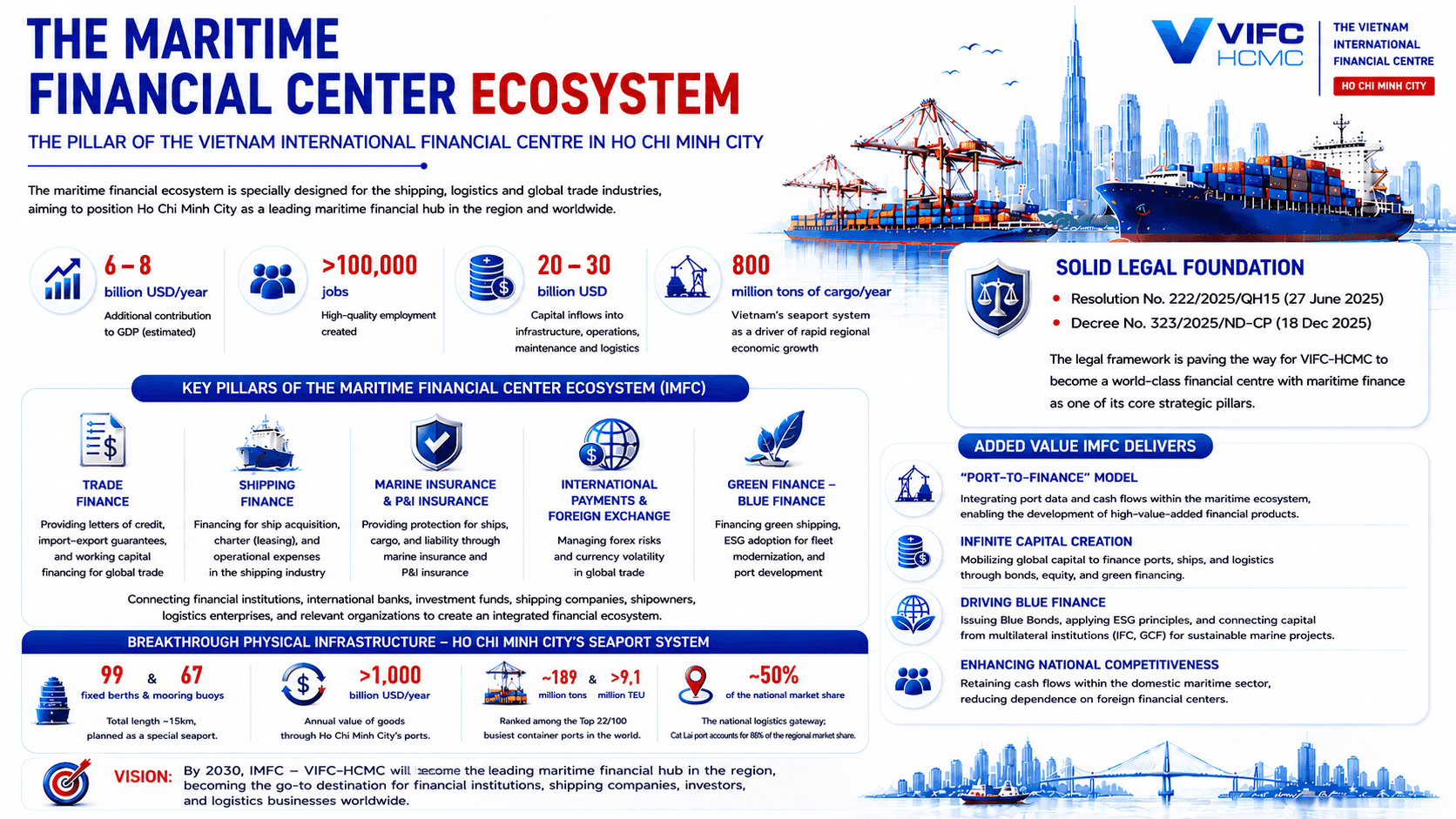
The development of the Southern seaport system is laying the foundation for a large-scale maritime ecosystem in Vietnam. From existing ports such as Cat Lai and Gemalink to strategic projects like the Can Gio international transshipment port and the Cai Mep - Thi Vai port cluster, the Ho Chi Minh City area possesses crucial conditions to participate more deeply in global logistics and trade chains.
Built on this solid infrastructure launching pad, the region's operations, stevedoring, and logistics service chains have developed strongly. In 2025, Vietnam's seaport system handled approximately 800 million tons of cargo, with HCMC and its surrounding areas accounting for 60% of the volume and 45-50% of the national import-export turnover—placing Vietnam among the regions with the fastest maritime growth.
However, despite possessing a massive volume of circulating goods with a total commercial transaction value through seaports potentially exceeding $1,000 billion (including the value of goods, logistics services, and related financial needs), the majority of high-end financial services that yield the largest profit margins—such as ship financing, marine insurance, international payments, or logistics risk management—are currently flowing through foreign financial centers.
To complete the value pyramid and retain this enormous profit source, Vietnam cannot merely remain a physical transshipment point for goods. The gradual formation of a comprehensive maritime financial ecosystem is an inevitable step.
In this context, the International Maritime Financial Centre (IMFC) ecosystem initiative was introduced, oriented to develop as a core component in the roadmap to build the Vietnam International Financial Centre in Ho Chi Minh City.
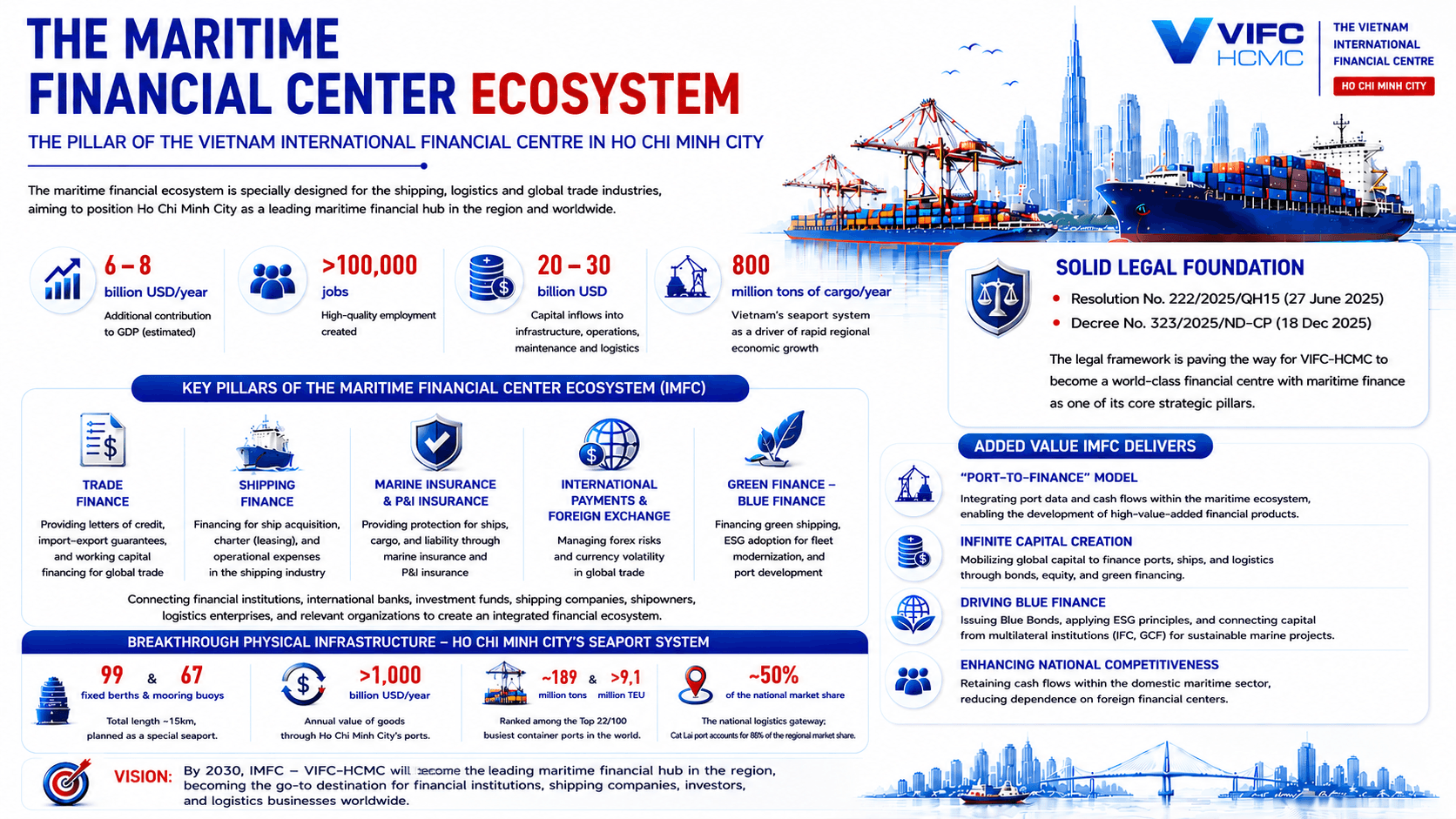
According to its orientation, the IMFC ecosystem will focus on unlocking capital flows and high-end services such as: import-export trade financing, ship financing, marine insurance and reinsurance, international payments, and freight risk management.
One of the strategic spearheads is the "Port-to-Finance" model—developing financial products based on real-world data and cash flows. Accordingly, the massive data source from transportation, containers, warehousing, bills of lading, and commercial payments will be digitized, becoming the foundation for providing capital and financial services to logistics and import-export enterprises.
Additionally, several international trends such as "Blue Finance," including green credit or green bonds in the maritime sector, are also considered potential long-term approaches, associated with the green transition process of the shipping and seaport industries.
The formation of the Maritime Financial Centre Ecosystem is expected to contribute to the development of high-value financial services linked to maritime, logistics, and international trade, while simultaneously attracting international capital flows into seaport infrastructure, shipping, and the marine economy.
This is also one of the vital components in the roadmap to build the Vietnam International Financial Centre ecosystem in HCMC, aimed at enhancing Vietnam's competitiveness in the global maritime and trade chains.
Subscribe for updates
We'll send latest updates to your email address.